When we first introduced the SP9 fin series, we mentioned that the intended construction methodology involved a combination of G10/Phenolic and plywood.
This build technique allowed the fin's blade to flex torsionally, a feature that could not be achieved with a solid fiberglass version.
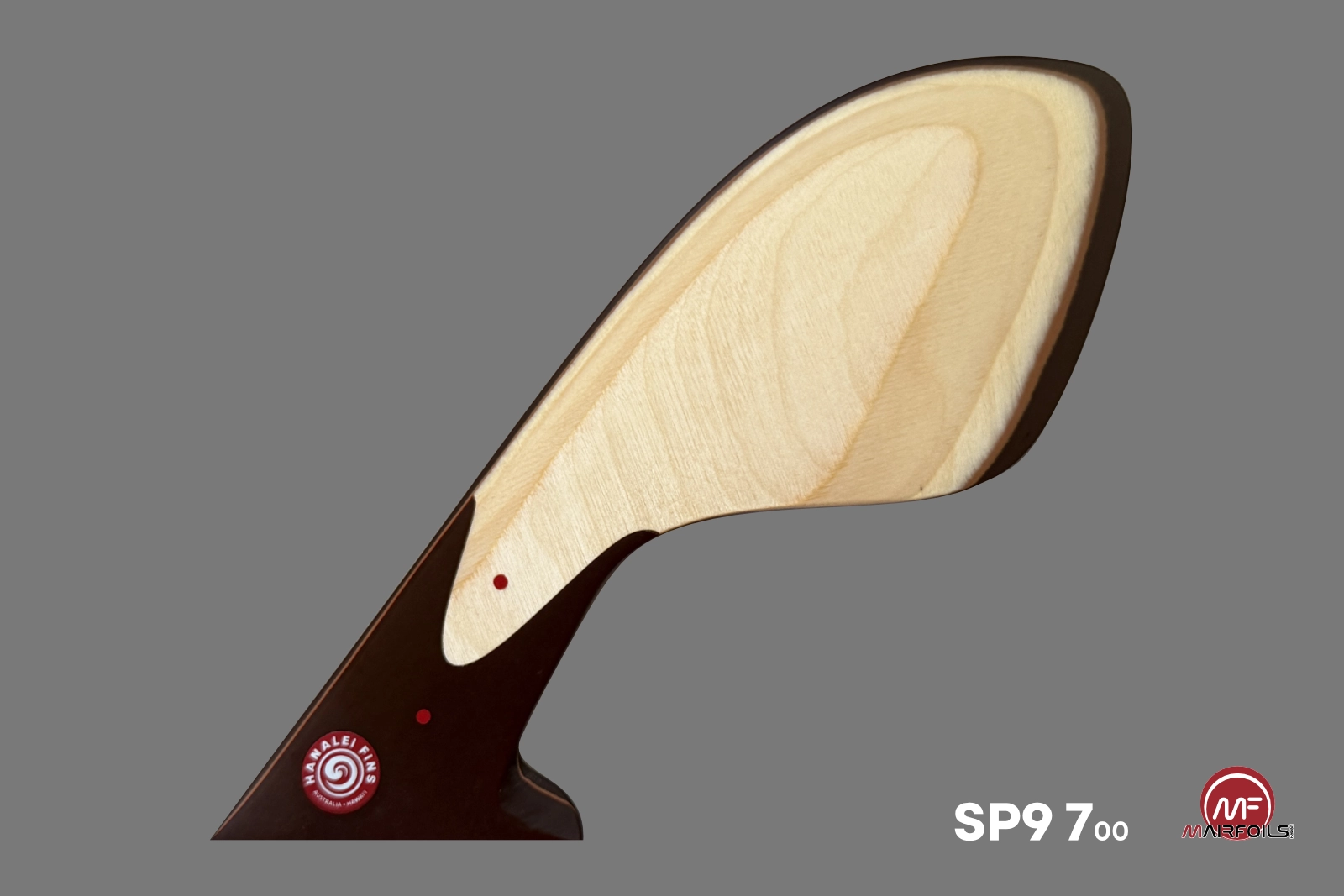
This is the phenolic version. The phenolic material introduces an additional dimension to the construction method, as it is lighter than G10 and creates a visually appealing contrast between the light-colored wood and the dark brown of the phenolic.
Initially, the plan was to add a layer of 4 oz over the wood to seal it. Instead, we opted to use an organic oil-based finish that is waterproof when dry.
All of the parts were cut on the CNC machine before being assembled.
In case anyone is wondering what that RED dot is all about, it is a G10 rod used to keep all the pieces aligned during the gluing process. There was another one in the base where the pin was located.
Since the blade has a core of phenolic, we are not concerned about the wood being damaged in a collision. This version utilizes a different profile for the plywood and how it transitions to the phenolic. This shape was chosen to enhance the torsional flex.
One of the reasons this construction method was selected is that it results in a much lighter fin. It is remarkable how much lighter it feels than the solid fiberglass version. We suspect it will float, but this has yet to be confirmed through testing.
It certainly makes for a stunning-looking fin.